




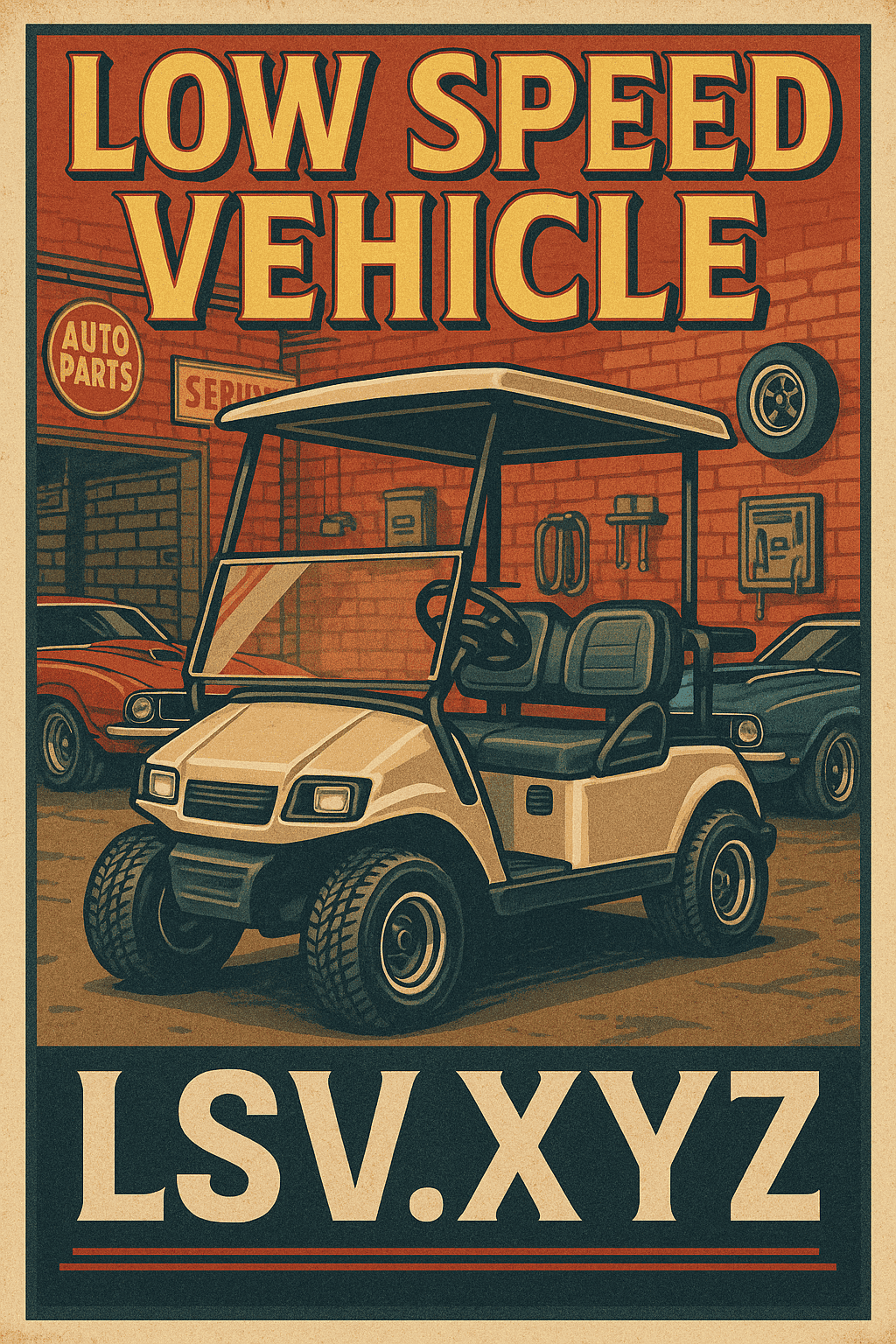
Low speed vehicles (LSVs) have shifted from niche golf carts to billion-dollar mobility programs. Buying an LSV today means tapping into a category that serves resorts, campuses, neighborhoods, farms, and industrial sites. The #LSV catalog inside LSV.XYZ tracks how buyers evaluate batteries, controllers, and accessories before signing purchase orders. This guide translates that research into a practical process for anyone building a fleet or purchasing a single rig for private property.
Step 1: define use cases and compliance
The first question buyers answer is how the LSV will be used. A golf-course shuttle, neighborhood patrol, farm runabout, and resort VIP transporter each follow different regulatory rules. United States buyers reference FMVSS 500, which outlines lighting, mirrors, and seat belt requirements for vehicles operating on roads posted 35 mph or less. Canadian provinces add their own inspection forms, while European municipalities map routes to quadricycle classifications. Draft a compliance checklist covering speed governors, VIN placement, and lighting to avoid retrofits later. Most buyers also log the type of terrain, desired payload, passenger count, and whether the vehicle requires ADA access. These notes dictate frame materials, suspension stiffness, and battery size.
Step 2: shortlist the top LSV brands
Three brands dominate current demand: Evolution Electric Vehicles, Club Car Urban, and Star EV. Evolution built its reputation on luxury seating, infotainment packages, and bold paint schemes. Club Car Urban leans into modularity, giving buyers configurable cargo boxes, flatbeds, and enclosed cabins. Star EV bridges those approaches with high-voltage drivetrains and robust dealer networks across North America, Europe, and Asia. Each brand publishes telematics-ready CAN bus data, which makes it easier to connect vehicles to fleet dashboards. When comparing quotes, ask for details about battery chemistry, warranty length, and charger compatibility so you can align the shortlist with your use case map.
Step 3: treat marketplaces and brokers as force multipliers
An LSV marketplace replaces the old phone tree of dealers and importers. Platforms provide 360-degree photos, inspection reports, and shipping calculators. They also host financing, insurance, and escrow tools so both parties can transact quickly. Buyers set alerts for new models or liquidation lots, then work with brokers to negotiate volume discounts. A broker familiar with the #LSV space knows which factories accept custom wraps, solar roofs, or geofencing modules without delaying delivery. They can also advise on whether to import fully assembled vehicles or completely knocked-down kits that save freight costs.
Step 4: secure financing and insurance
Even smaller fleets treat LSV purchases like capital projects. Banks and specialized lenders now offer LSV leases with seasonal payment schedules, acknowledging that many operators earn revenue during peak resort or tournament seasons. Municipal buyers rely on tax-exempt leases, while private property owners often bundle vehicles into equipment credit lines. Insurance carriers reward buyers who share telematics data, document driver training, and log maintenance. The fewer unknowns in your documentation, the faster underwriters approve comprehensive and collision coverage. Remember that the billion-dollar rise of LSVs means more insurance carriers understand the risk profile, which keeps premiums competitive.
Step 5: prep delivery, customization, and lifecycle support
Plan delivery like a construction project. Coordinate staging areas, charger installation, and driver onboarding before the truck arrives. If you are buying for a neighborhood or farm, scout access routes for large delivery trailers. For commercial fleets, book photographers or marketing teams to capture launch day, because early customer awareness accelerates adoption. Customization happens in parallel: wraps, upholstery, storage modules, cargo racks, and infotainment systems all ship with installation guides. Capture every serial number and firmware version inside your asset management system so spare parts can be ordered quickly.
Why LSV demand keeps rising
LSVs solve practical problems. Golf courses expand guest capacity without building new paths for full-size vehicles. Neighborhoods prefer quiet electric shuttles for security patrols. Backyards and farms use LSVs for hauling feed, tools, and family members without burning fuel or upsetting their neighbors. These micro-mobility wins explain why analysts size the LSV ecosystem in the billions and still growing. Battery improvements extend range, controllers refine torque delivery, and safety features such as collision avoidance migrate down from electric cars. Buyers who study the market now can launch programs that run for a decade or more.
Next steps
Visit the LSV.XYZ tag pages to evaluate individual use cases. Use the Low Speed Vehicle brand contacts listed above to schedule test drives. Compile your compliance checklist, engage a broker or marketplace, and line up financing before signing the purchase order. The #LSV movement rewards buyers who plan thoroughly, capture data, and celebrate the deployment with their communities. With a billion-dollar industry behind it, the Low Speed Vehicle you buy today will be easier to upgrade, resell, or scale tomorrow. LSV.XYZ is here to make every step of that process transparent.
ROI modeling and maintenance discipline
Budget planning for LSV purchases borrows best practices from fleet management. Depreciation schedules typically run five to seven years, yet well-maintained vehicles last a decade or more. Track kilowatt hours per mile, tire rotations, and brake pad swaps from day one so you can predict replacement costs. Because battery prices continue to decline, many buyers schedule pack upgrades in year four to extend range and resale value. Farms and neighborhoods often run LSVs for 1,500 to 2,000 hours before major overhauls; documenting those milestones protects warranties and bolsters resale conversations.
Accessories that boost productivity
Buyers differentiate their fleets with accessories. Turf-friendly tires protect golf courses, while all-terrain tires help farms traverse muddy trails. Lockable storage keeps resort staff from hauling personal bags, and tool racks turn the same chassis into a facilities truck by morning. LED glow kits, infotainment tablets, and acoustic panels elevate VIP experiences, while heated seats and windshield defrosters make northern campuses comfortable year-round. Every accessory you add should pass through the compliance checklist to ensure the LSV remains road legal when crossing public streets.
Celebrate the launch and plan the upgrade path
An LSV program succeeds when stakeholders get excited. Host a demonstration day, invite local media, and capture photo and video assets you can reuse in sales decks or neighborhood newsletters. Encourage riders to submit feedback via QR codes so you can fine-tune routes, stops, and charging schedules. The billion-dollar trajectory of LSVs means accessory makers, software developers, and energy providers will continue releasing upgrades. Document lessons learned and revisit the buying playbook annually to evaluate whether it is time to add more vehicles, swap in new battery tech, or open the fleet to community rentals.
By treating the “Buy LSV Now” initiative as a structured process instead of an impulse purchase, you gain a strategic asset. Golf courses keep pace with member demand, neighborhoods enhance safety, backyards and farms gain silent workhorses, and every rider experiences the promise of compact electric mobility. LSV.XYZ and #LSV reporting will continue sharing data, vendor lists, and case studies so your buying decision stays future-proof.
Related posts
View all- VIP Low Speed Vehicles and hospitality experience VIP low speed vehicles take everything riders expect from private sedans—quiet cabins, chilled beverages, and concierge-level service—and …
- Low Speed Vehicles in China China manufactures more low speed vehicles than any other country, driven by vast demand from county-level cities and export buyers. …
- Low Speed Vehicle top speed science LSV regulations cap top speed at 25 mph, but the engineering behind that limit is nuanced. Manufacturers tune motor controllers, gear …
- Low Speed Vehicle marketplaces Digital marketplaces have transformed how fleet managers and entrepreneurs source low speed vehicles. What used to require phone trees and …
- Low Speed Vehicle insurance frameworks Insurance underwriting for low speed vehicles looks deceptively simple until you account for mixed-use routes, volunteer drivers, and …